In dental clinics, water quality does not depend only on the source it comes from. On the way to the point of care, the water passes through reservoirs, connectors, and the unit's internal lines, and the conditions inside the system can affect its quality even when the feed water is fine.
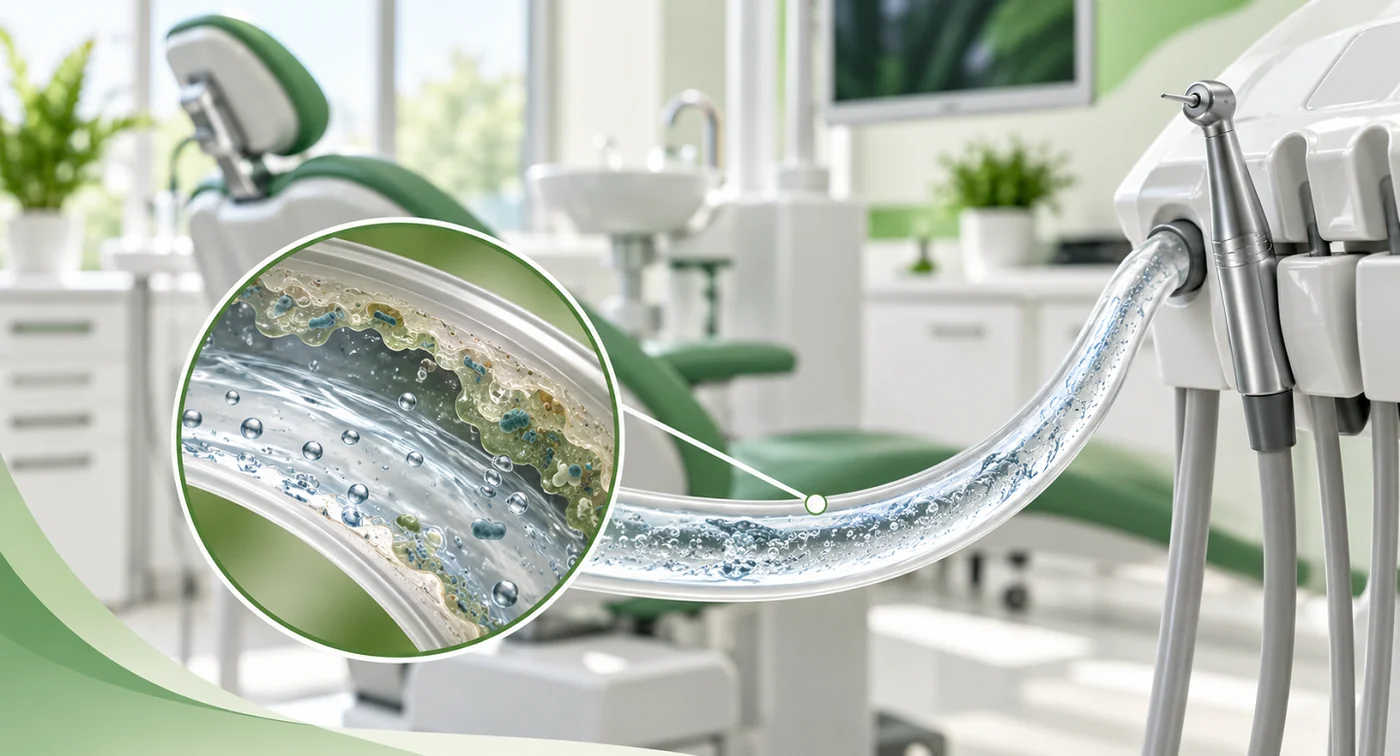
One of the key factors here is biofilm, a layer of microorganisms that develops on wet surfaces. Understanding the process helps explain why maintaining the water system and monitoring it are part of the daily routine in a dental clinic.
What is biofilm, and how does it form in the unit?
Biofilm is a community of microorganisms that attaches to a surface inside a matrix it produces. In the dental unit, the thin and long waterlines, the variable flow, and the periods when the water stands all create conditions that encourage it to form.
The practical meaning is that looking only at the water entering the clinic is not enough. You also have to account for the conditions in the system the water passes through before use.
What is the link between the pipe wall and the water leaving it?
Biofilm attaches to the inner walls of the pipe, but microorganisms from it can be released into the water stream. So a system that looks fine from the outside may require a closer look at what happens inside it. The FDA describes biofilm formation and its release into the water as one of the challenges in maintaining dental waterlines.
From a clinic management standpoint, it helps to connect the technical information about the unit with ongoing records: what the feed system is, what maintenance was done, and what is known from previous results.
Maintenance and testing answer different questions
Maintenance is meant to service the system and keep it operating per the guidelines. A water test provides information about the parameters measured in a particular sample. To use that information effectively, the clinic should be able to link the result to the unit, the sampling point, and the test date.
It also helps to distinguish between a water test and a direct test of biofilm. When ordering a service, clarify exactly what is tested and what can be concluded from the results, without assuming every test covers all possible microorganisms.
For full detail on planning the tests and the sampling points in dental clinics, see water sampling for dental clinics.
The importance of a continuous record
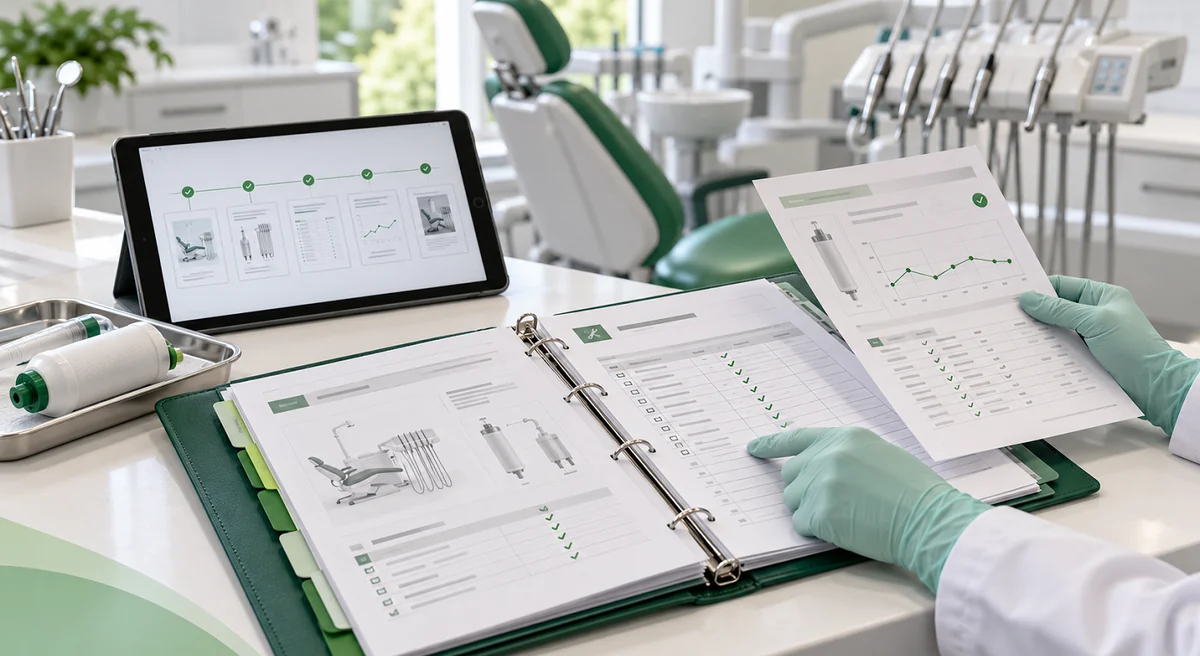
An organized file for the water system can gather the equipment details, the manufacturer's instructions, the maintenance actions, and the lab reports. That way, when a result that needs looking into comes back, you can present a broader picture to the professional.
For example, it helps to know whether a component was replaced, whether the unit was out of service, or whether treatment was done close to the test date. These are details worth sharing during the review, to help make sense of the result in context.
What to clarify before treating the waterlines?
Do not choose a material or treatment method just because it suits another system. Materials that do not match the device manufacturer's instructions can damage components and even create a risk to patients. Before treatment, identify the unit model and the water treatment system, and find the current instructions. When treatment is actually needed, you can use a pipe cleaning and disinfection service matched to the equipment, together with re-sampling for verification.

Want to make sure your clinic's unit water is in good shape?
We will build a sampling plan tailored to your clinic, take the samples from the unit and the tubing, and follow up with disinfection when needed, with a clear report that supports your infection control.
We'll be happy to help
FAQ about biofilm in the dental unit
Can biofilm develop even in a unit fed with clean drinking water?
Yes. Conditions inside the unit waterlines can encourage biofilm to develop, so the quality of the source water is not the only measure to consider.
Does using an independent tank replace maintenance of the lines?
No. The tank is part of the water system, and the internal lines need attention per the manufacturer's instructions, alongside disinfection and monitoring.
Can the same disinfection method be used on every unit?
You must confirm it suits the equipment and the manufacturer's instructions. A method that fits one device is not necessarily right for another, and an unsuitable agent can damage components.
Does a water test detect biofilm directly?
A water test points to bacteria released from the biofilm into the water stream, but it is not a direct test of the biofilm layer on the pipe wall. When ordering a test, check exactly what is tested and what can be concluded from the result.
How do you reduce biofilm formation in the unit lines?
A combination of routine maintenance per the manufacturer's instructions, equipment-appropriate disinfection, and periodic monitoring helps keep water quality over time. Documented sampling helps verify the maintenance is working.