The report comes back from the lab, and instead of the familiar "pass" there is an abnormal finding. In a restaurant, a food plant, a catering company or an institutional kitchen, this is the moment the questions start: what exactly was found? Is the problem in the product itself, or on a surface, a piece of equipment or somewhere else in the kitchen? Do we need to disinfect? And when do we test again?
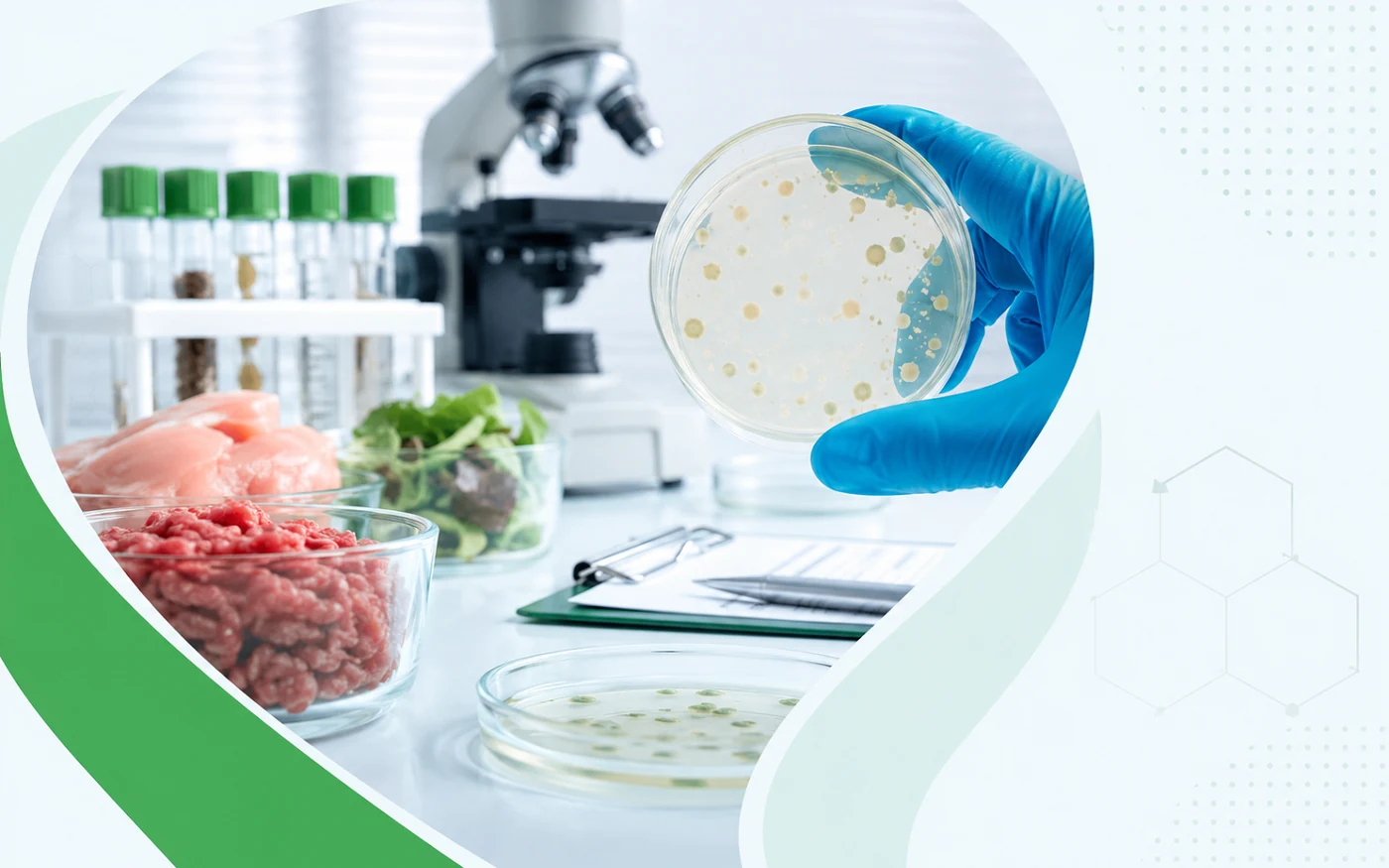
The short answer: an abnormal food test result is not the end of the process, it is the beginning. The goal now is to understand where the finding came from, which products and areas may be involved, how to deal with it, and how to confirm afterwards that the treatment actually worked.
Step 1: Understand What the Result Really Says
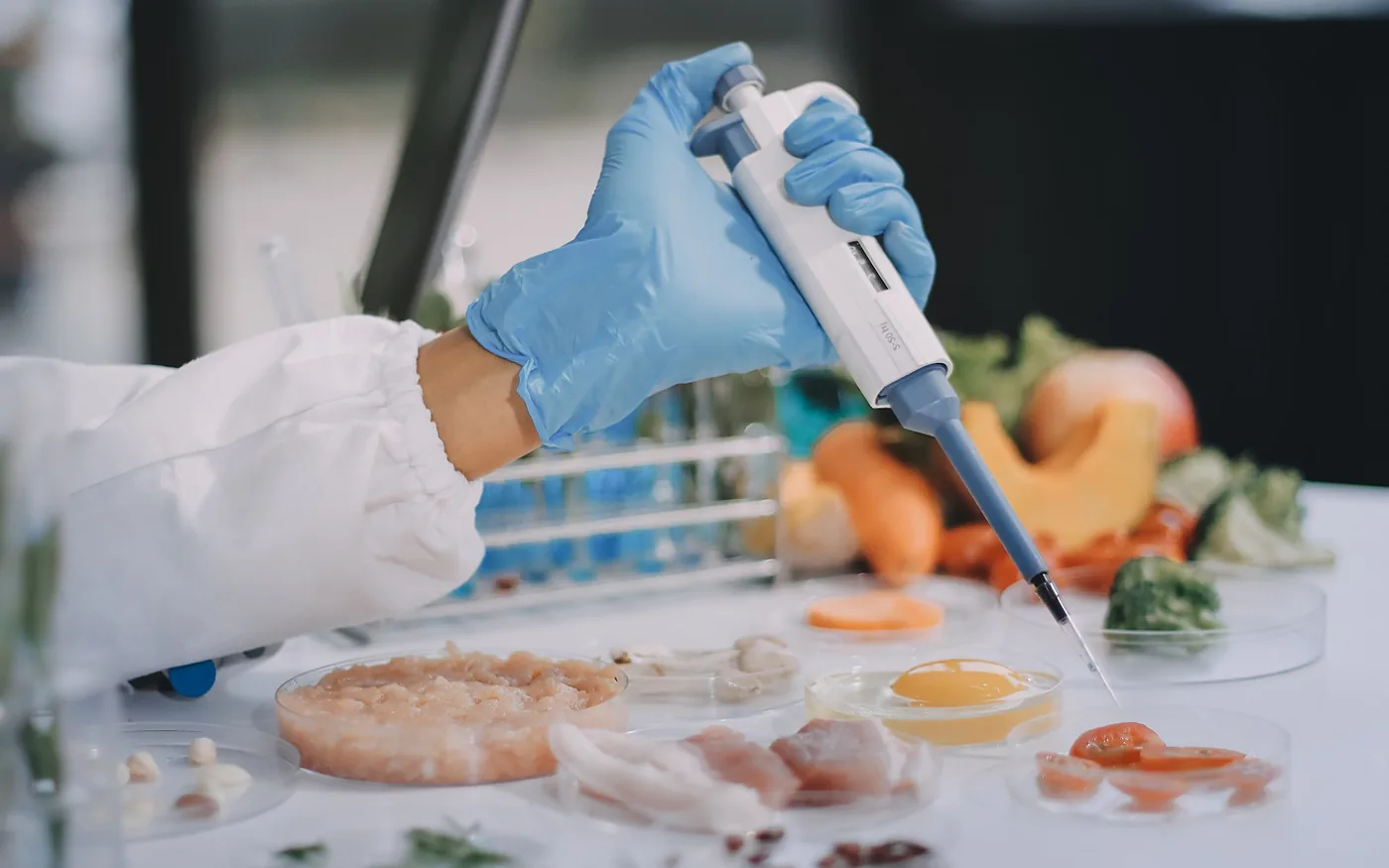
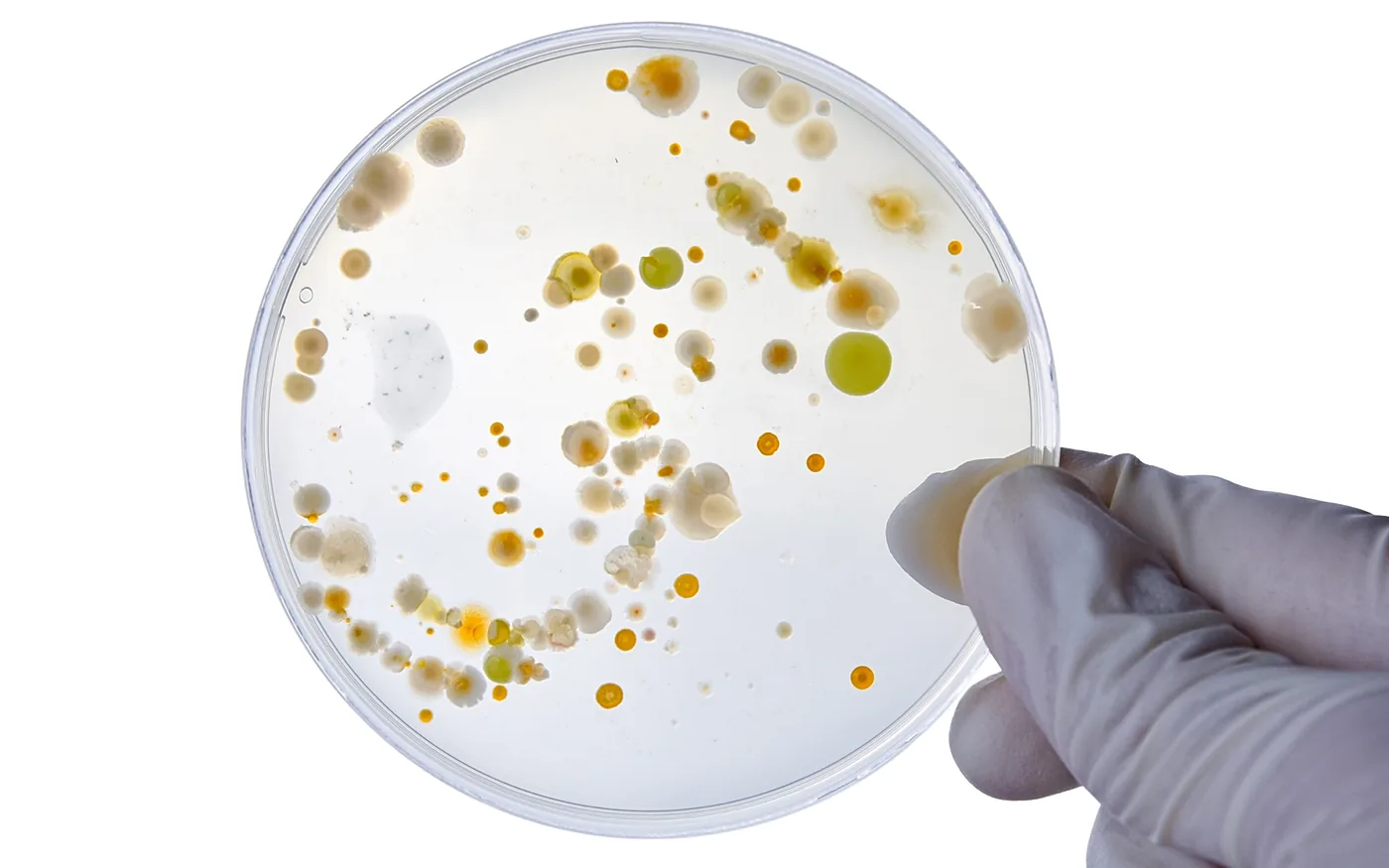
Not every abnormal result tells the same story. Food Sampling and testing cover a wide range of parameters. Microbiological tests can detect, as needed, pathogens and microorganisms such as Listeria, Salmonella, E. coli, Staphylococcus, Bacillus cereus, yeasts and molds. Other tests examine chemical parameters, ingredients or contaminants relevant to the product.
So before trying to fix anything, answer four questions:
- What was found? Which microorganism or parameter exceeded the limit.
- In which sample? A prepared dish, a raw material, a finished product or a surface.
- From which point? Where exactly in the process the sample was taken.
- What was the purpose of the test? Routine monitoring, a pre-release check or investigating a suspicion.
A finding in a prepared dish at a restaurant does not necessarily lead to the same investigation as a finding in a raw material at a plant, and an abnormal result in a finished product calls for a different view than a finding from sampling the production environment.
Step 2: Ask Whether the Problem Really Started in the Product
This is one of the most important points in the investigation, and one of the easiest to miss. When a product fails, the natural instinct is to focus on it. But on its way to the plate or the package it passed through many stations: receiving and storing raw materials, preparation or production, contact with equipment and surfaces, moving between staff, and sometimes chilling, heating and packaging.
The product is where the contamination was detected, not necessarily where it started.
In a plant, the investigation may lead to areas along the production line. In a restaurant or institutional kitchen, it may lead to prep surfaces, utensils or storage areas. The goal is to connect what the report says with what is actually happening on the ground.
Step 3: Environmental Sampling to Find the Source
When there is a suspicion that the problem is not limited to the product that was tested, environmental sampling in plants and kitchens becomes a central part of the investigation. Instead of testing only the food again, samples are also taken from surfaces, equipment and areas connected to the process.
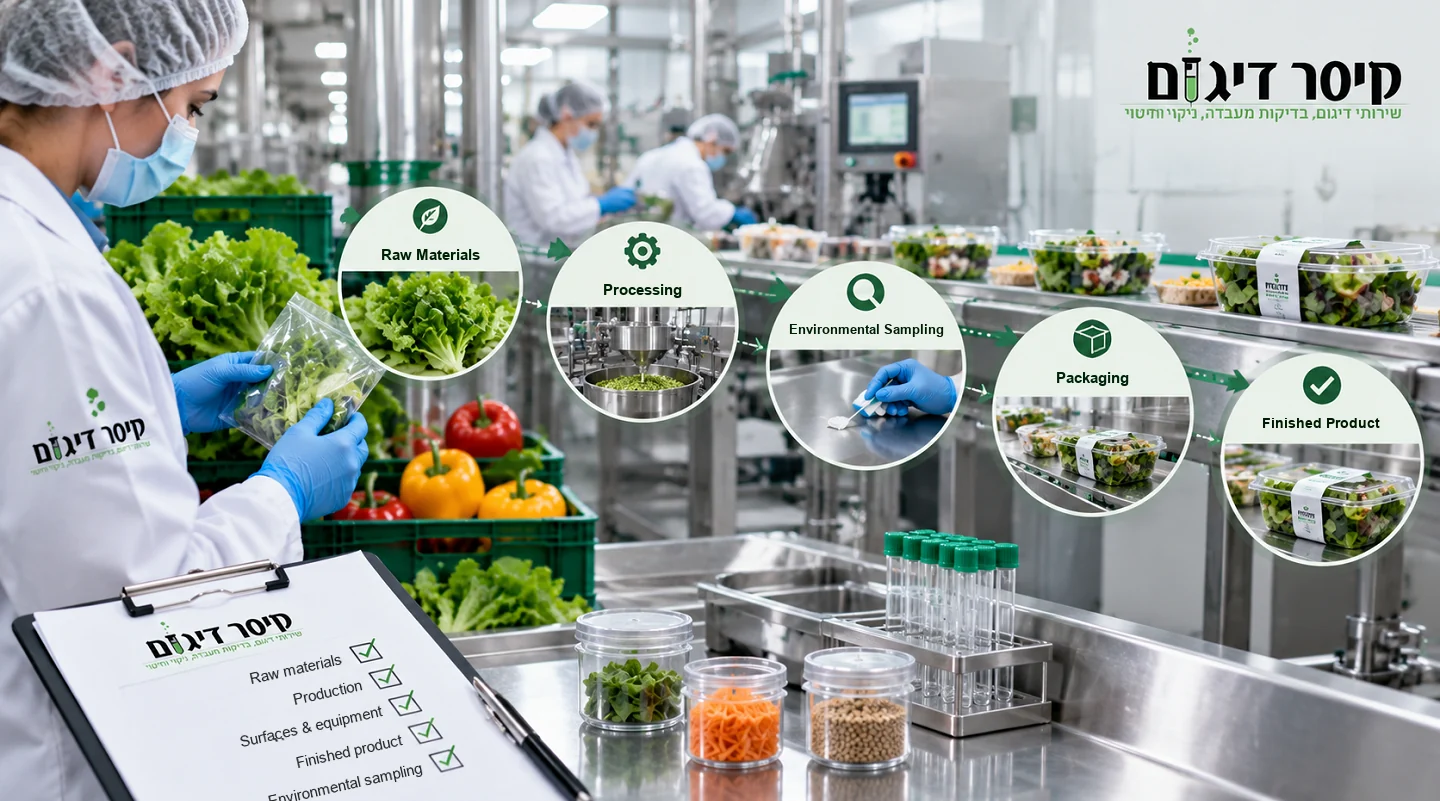
Possible sampling points include parts of equipment and machinery, conveyors, work surfaces, wet areas and drains. They are chosen according to the process and the risk you want to examine.
The principle is simple: food testing shows that there is a problem. Environmental sampling helps you understand where to look for its source.
This is especially critical when the same abnormal result keeps coming back. Treating only the product, without examining the environment in which it is made or prepared, may leave the source of contamination in place.
Step 4: Cleaning and Disinfection Matched to the Finding
Once the picture is clearer, you move from tracing to treatment. You do not disinfect "bacteria" in general: a manufacturing plant, a restaurant kitchen and a packaging line are different environments, with different possible sources of contamination, and the treatment has to fit them.
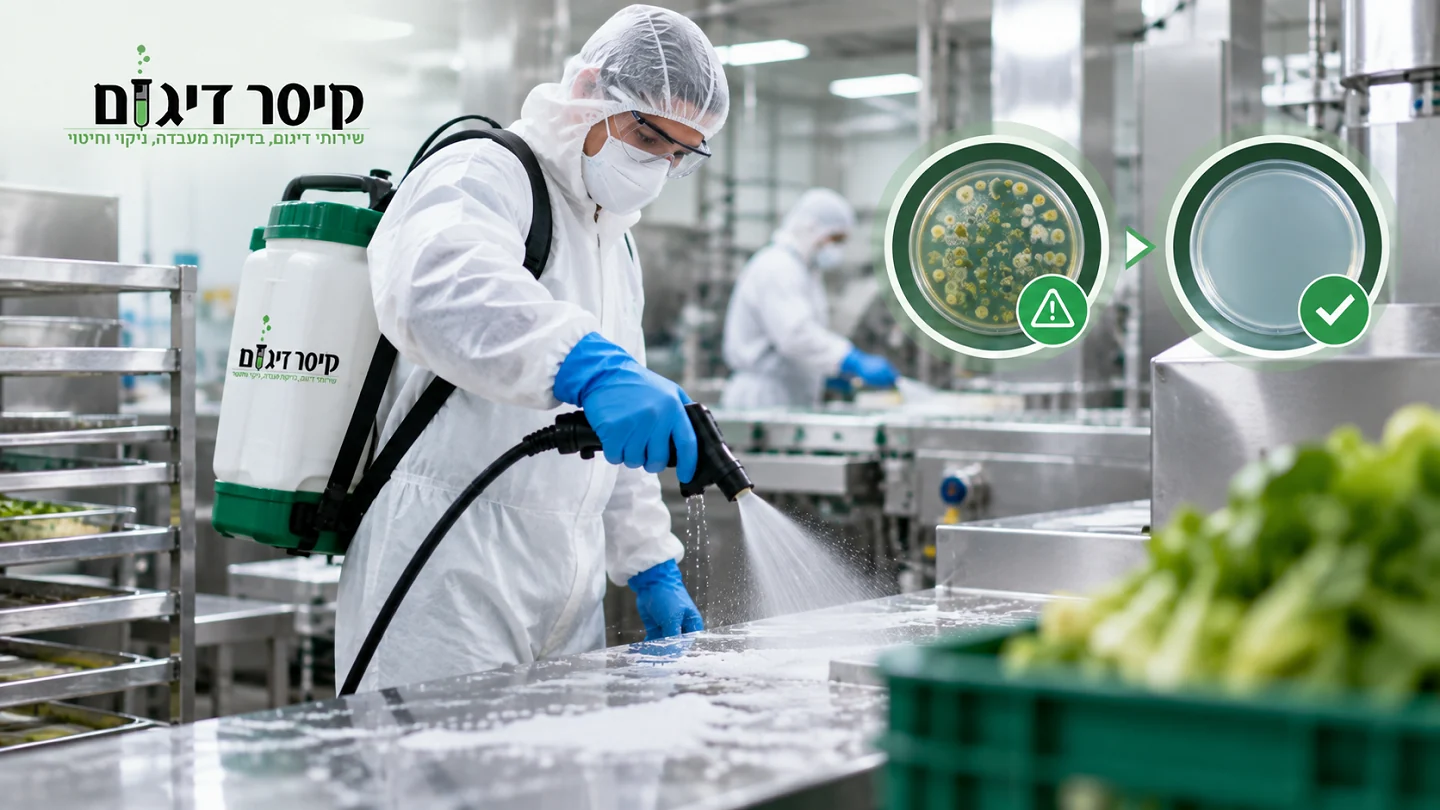
When contamination is found that requires treatment on site, Kesar Digum also provides professional cleaning and disinfection services using approved materials, according to the type of finding and the relevant areas: work surfaces, equipment, machinery and other areas connected to the process.
The advantage of a single provider is that the treatment is not cut off from the test that led to it. The company that took the samples and knows the findings is the one that treats them, with no need to start over with another contractor.
Step 5: Follow-Up Sampling, Because Cleaning Is Not Proof
"We cleaned and disinfected, so everything is fine?" It is not always right to answer that based only on the fact that cleaning was done. After treatment, and depending on the case, follow-up sampling can be carried out at the same relevant points, with the samples sent for testing in an accredited laboratory.
When the source of the problem was environmental, follow-up sampling carries particular weight: it lets you return to exactly the area where the finding was made and test it after treatment. An orderly process looks like this:
- An abnormal finding in the lab report
- Investigation: what was found, in which sample and from which point
- Environmental sampling to identify relevant points
- Cleaning and disinfection matched to the finding
- Follow-up sampling as needed
- Ongoing monitoring
Why It Matters to Act Quickly
In the food sector, time plays a role. The production line keeps running, dishes keep leaving the kitchen and raw materials keep being used to make more products. So a result that requires investigation should reach the relevant people in the business immediately, to decide on next steps according to the finding and the circumstances. Official guidance in this area is published by the Ministry of Health's National Food Services.
What an Abnormal Result Can Teach You About Your Kitchen or Plant
It is easy to see a failed test as a failure. From a quality control point of view, it is usually valuable information that invites you to take a fresh look at the process:
- Is there an area that is hard to clean?
- Does prepared food come into contact with a problematic surface?
- Does the cleaning procedure itself need to change?
- Does the abnormal result keep recurring at the same point or the same stage?
When you look at results over time rather than at a single test, patterns start to emerge. This is where Food Sanitarian Supervision can help translate findings into changes in daily work. That is how food testing and environmental sampling turn from a way of finding bacteria into a way of understanding your business.
From Sampling to Treatment: One Continuous Quality Control Process
Kesar Digum provides food sampling and testing services for food plants, restaurants and catering companies, institutional kitchens and other businesses in the sector, nationwide. Samples are taken on site by certified samplers, transported chilled and tested in ISO 17025 accredited laboratories, under the accreditation of the Israel Laboratory Accreditation Authority and with the recognition of the Ministry of Health. Results come back in a clear report with recommendations.
When contamination requiring treatment is found, you can also get professional cleaning and disinfection and follow-up sampling after treatment. That way the test does not stop at the abnormal result, but becomes a process of tracing, treatment and renewed control.
Got an Abnormal Food Test Result?
Do not settle for the lab report alone. We will come to you, investigate the finding with you, and carry out environmental sampling, cleaning and disinfection where needed, and follow-up sampling that shows you the situation has changed.
To schedule a service or ask a question, call 08-9332299You can also reach us on WhatsApp or leave your details for a callback
We'll be happy to help