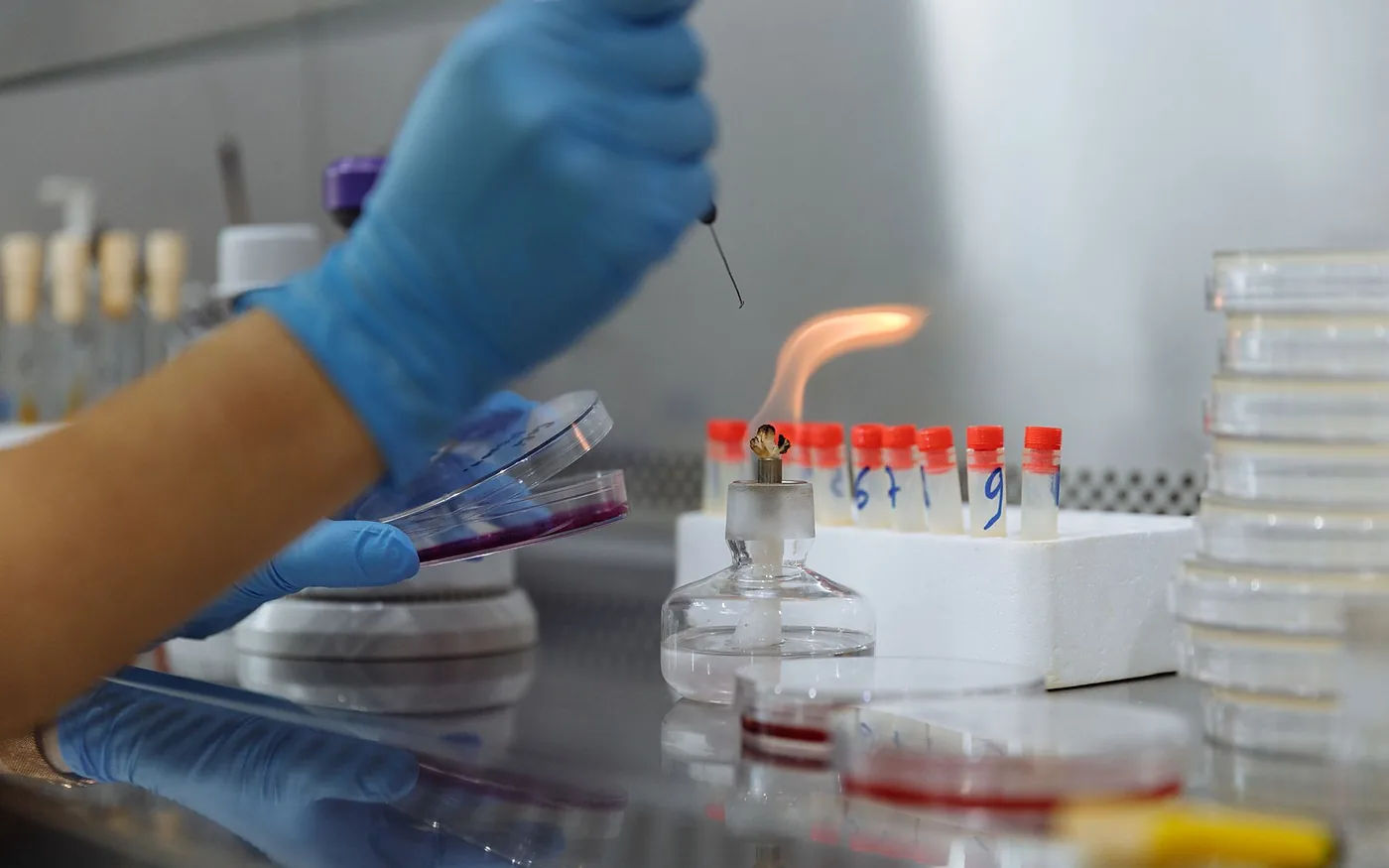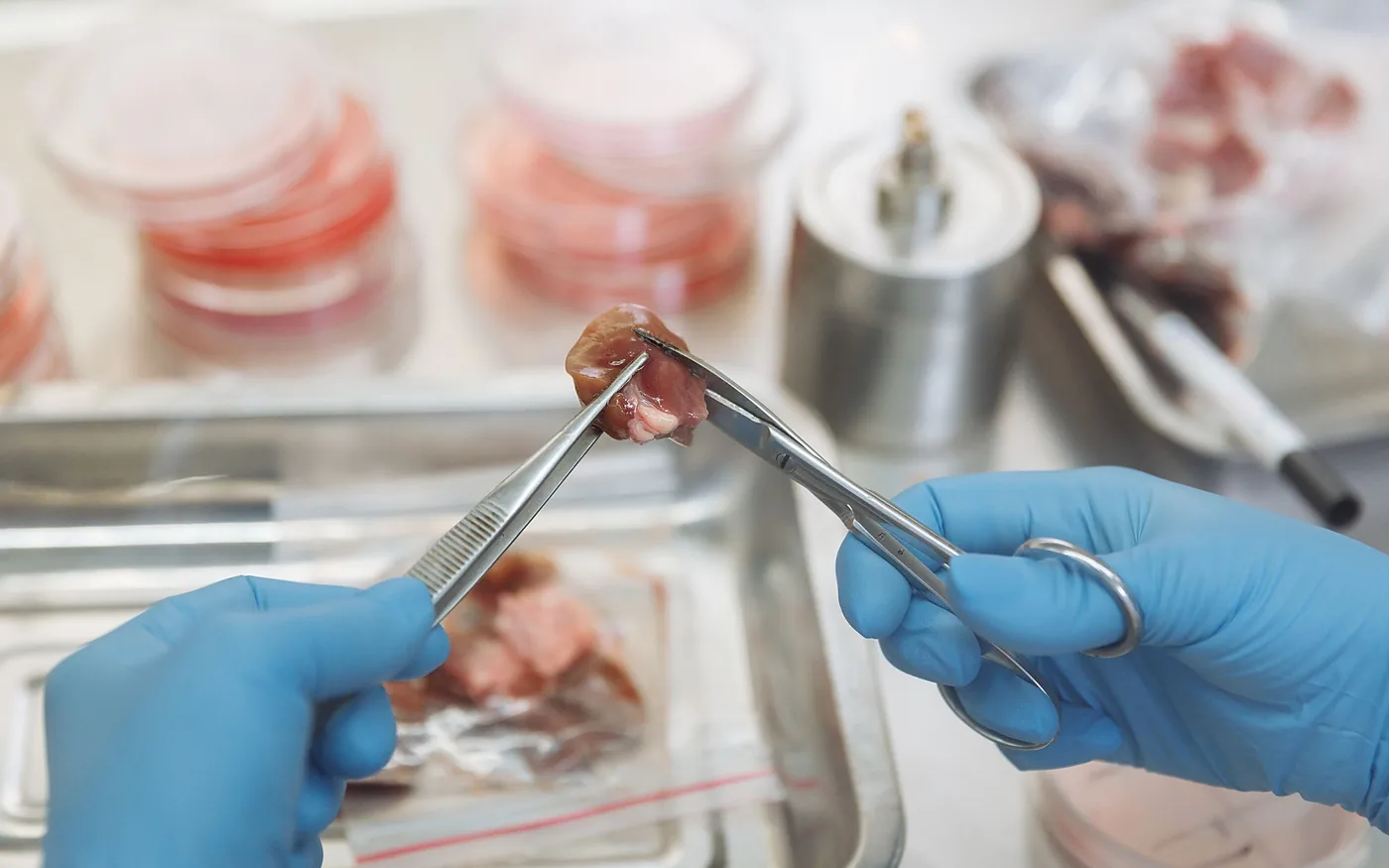
What the eye cannot see, a lab test can detect. A fresh appearance, a normal smell or the absence of visible signs tell you nothing about pesticide residues in food. To check whether residues are present and at what concentration, you need proper sampling and a chemical test matched to the product and to the substances you are looking for.

What is pesticide residue testing in food?
Pesticides are used to protect crops and produce from pests and disease. After they are applied, residues of certain active substances and breakdown products may remain in or on the food, depending on the substance and on how the tested residue is defined.
A laboratory test is designed to identify the substances included in the test panel and measure their concentrations. The results are examined against the requirements that apply to the specific combination of pesticide and type of food.
Please note - detecting a residue does not necessarily indicate a violation. A distinction must be made between identifying a substance and measuring a concentration that exceeds the maximum permitted level. A result in which no residue was found also refers only to the substances tested and to the detection capability of the method, and is not proof of the complete absence of every pesticide.
Who are the tests for?
Pesticide testing in food can be built into the quality control of growers, packing houses, food manufacturers, importers, distributors and retail chains. The need may arise when evaluating a new supplier, receiving raw material, investigating an unusual finding, or meeting a customer's requirement.
The tests are not limited to fresh fruit and vegetables. Depending on the need and the laboratory's capability, products such as herbs, grains, legumes, spices and processed food can also be examined. Each type of food requires the test method to be adapted accordingly.
The testing plan should take into account the origin of the produce, the type of crop, the supplier's history and the product's intended use. For exports, the requirements of the destination market must also be checked.

Food sampling for pesticides: the test begins in the field
The laboratory result refers to the sample that reached the lab. The way the sample is taken therefore affects how far you can draw conclusions from it about the batch.
Before sampling, you define which batch is being examined and what the purpose of the test is. According to the sampling plan, you determine from which points the food will be collected, how many units will be taken and what the sample quantity will be. Taking a sample from a single accessible spot may not reflect the variation present in the shipment.
Taking, labeling and transport
During sampling, tools and packaging suitable for the test are used, while preventing external contamination or the transfer of substances between samples. The labeling and documentation must make it possible to link the sample to the product, the supplier and the batch it was taken from.
The food must not be washed, peeled or processed before it is delivered for testing, unless this is explicitly required by the sampling instructions. Such actions may alter the sample and the meaning of the result.
Storage and transport conditions are coordinated with the laboratory according to the type of product and test. Following them is intended to minimize changes to the sample until the time of analysis.
Does a single test detect every pesticide?
No. A multi-residue screen can cover many substances, but it does not necessarily cover every possible one. Certain substances require a dedicated test.
Therefore, before ordering a test it is important to clarify the list of substances tested, whether complementary tests are needed and whether the method's sensitivity suits the purpose of the test. If a particular substance is suspected, it is worth mentioning its name already at the coordination stage.

Accredited to ISO/IEC 17025: what to check
The ISO/IEC 17025 standard is an international standard addressing the competence of testing and calibration laboratories. In Israel, the Israel Laboratory Accreditation Authority grants accreditation for defined activities, listed in each laboratory's scope of accreditation.
When choosing a laboratory for pesticide residue testing, make sure the accreditation is relevant to the requested tests and to the type of food. The mere fact that a laboratory is accredited in a certain area does not mean that every test it offers is performed under accreditation.
Food sampling and laboratory testing are stages that should be examined separately: accreditation to perform the analysis does not in itself indicate that field sampling is covered by the accreditation. When additional recognition from a competent authority is required, its suitability for the purpose of the test must also be verified.
How do you read the results report?
The test report should make it possible to understand what was tested, by which method and what was found. When reviewing the report, it is important to check the sample identification, the names of the substances, the reported concentrations, the units of measurement and the accompanying notes.
The findings are compared against the current requirements that apply to the product. Do not rely on a general value found for a different food or for a different destination market.
Frequently Asked Questions
Does a microbiological test detect pesticides?
No. Tests for bacteria, yeasts and molds are not intended to detect pesticide residues. A suitable chemical test is required for that.
Can a specific pesticide be tested?
A focused test can be arranged, subject to the availability of a suitable method at the laboratory and to the type of food. It is important to state the requested substance in advance.
How much food needs to be sent for testing?
The quantity depends on the product, the sampling plan and the test panel. Obtain instructions before collecting the sample.
How long does the test take?
Turnaround depends on the type of test, the number of substances and the need for confirmation or complementary tests. The delivery date for results is coordinated in advance.
Does a conforming sample prove the whole shipment is fine?
The result refers to the sample that was tested. The ability to draw conclusions from it about the shipment depends, among other things, on how the sampling was done and how representative it was.
Need to test produce, raw material or a food product? We're happy to help - to arrange food sampling call 08-9332299You can also message us on WhatsApp or leave your details and we'll get back to you