You are sitting in a restaurant, the dish arrives at the table and looks excellent. But long before the plate, the waiter and the table, an entire process took place behind the scenes: raw materials were received, stored, thawed or cooked, moved between work surfaces, held at various temperatures and finally served.
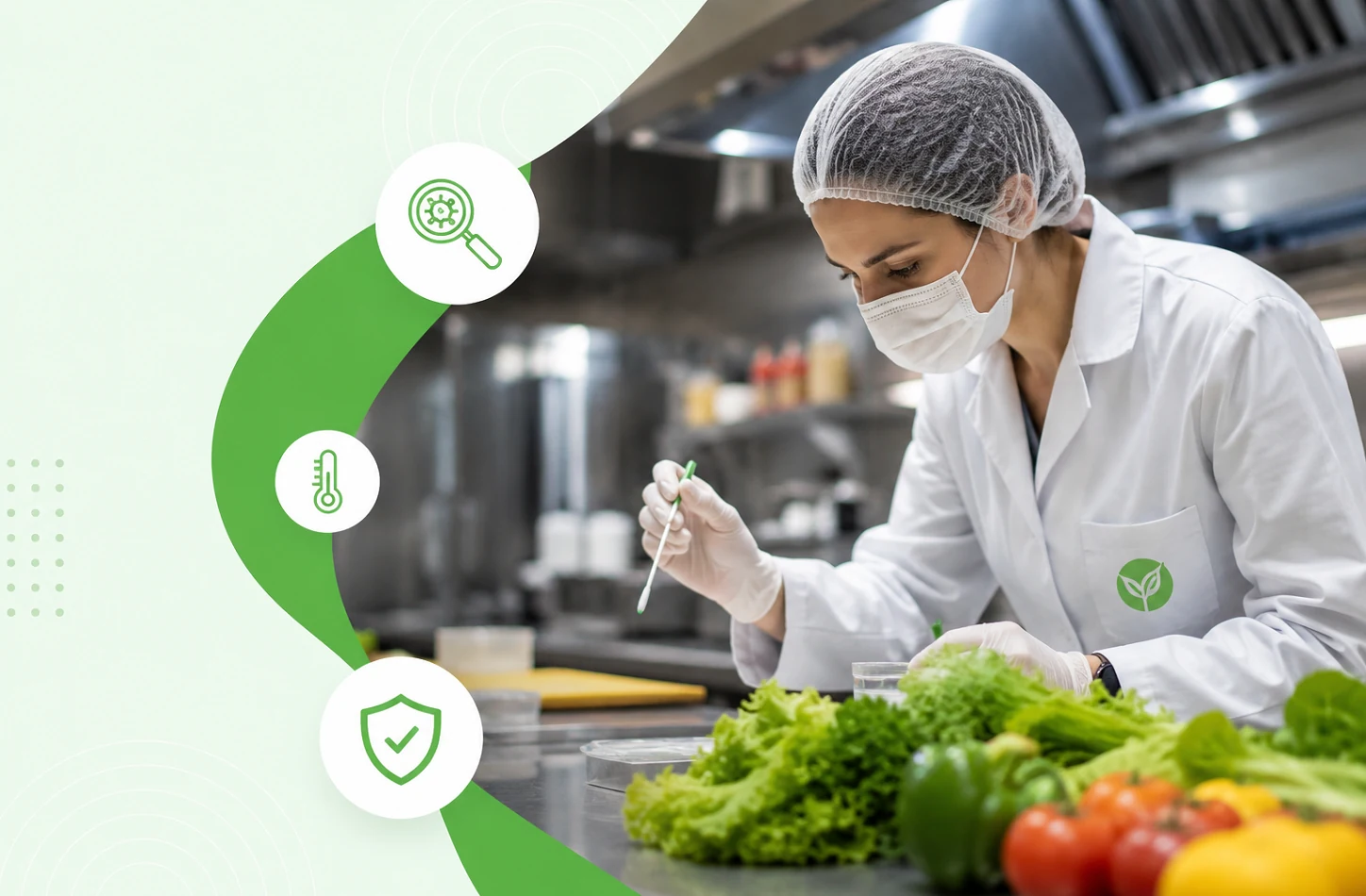
At each of these stations a risk to food safety can arise.
So when we talk about food sampling in restaurants, we do not test only whether "the food is good". The goal is to examine food safety and the work environment in which it is prepared, and to identify failures that may occur long before you can see, smell or taste that something is wrong.
What Does the Ministry of Health Check in Eating Establishments?
Eating establishments in Israel are subject to licensing and sanitation requirements intended to reduce risks to public health. Supervision is not limited to visible cleanliness.
Among the matters examined are the source of the raw materials, the storage conditions, keeping suitable temperatures, separation between raw food and ready-to-eat food, hygiene, work processes and the suitability of the structure and equipment to the activity carried out there.
In 2026 the Ministry of Health also announced a reform in the field of eating establishments, emphasizing a shift toward a more risk-management-based approach.
The meaning is clear: food safety is not just a list of technical requirements, but a system that needs to identify the real risk points in the work process and manage them on an ongoing basis.
Food Sampling: What Can Be Tested in the Kitchen?
Laboratory tests and sampling are an important tool in the control process. The sampling program should be set according to the type of business, the food produced or served, the work processes and the relevant risks.
Food samples
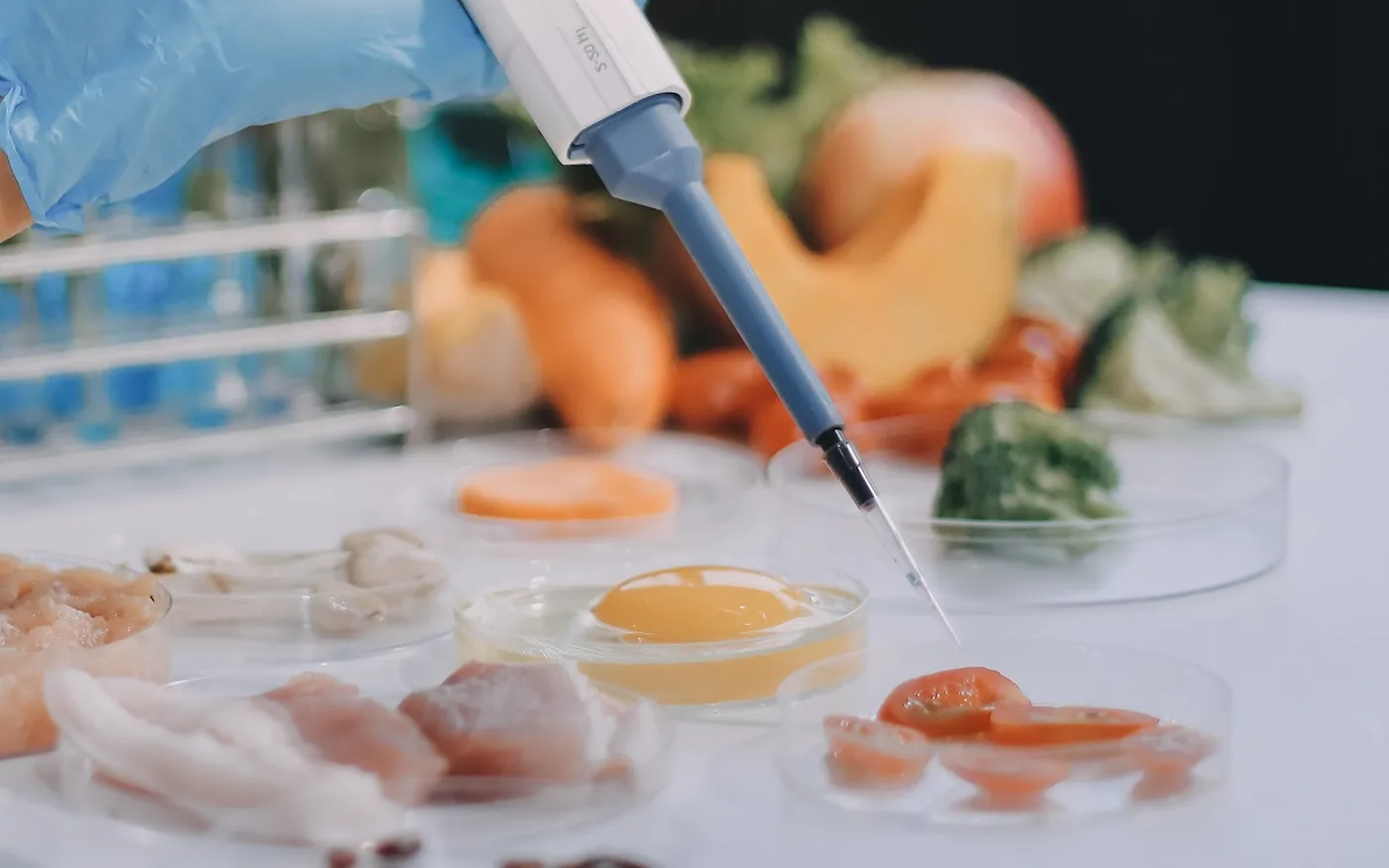
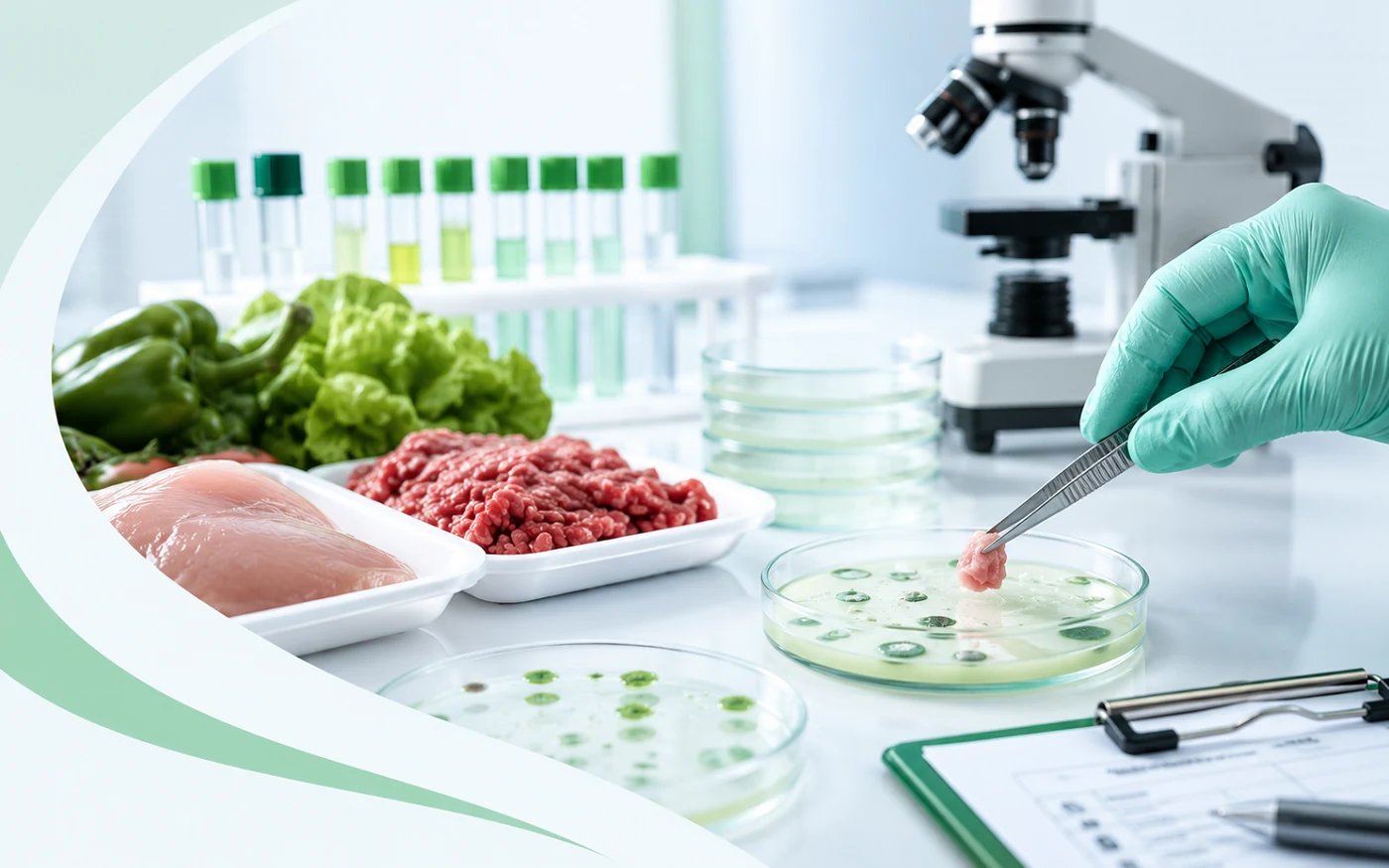
Samples can be taken from prepared food or from products at various stages of the preparation process and sent for microbiological testing at the laboratory.
Depending on the type of food and the purpose of the test, you can check various microbial indicators and look for microorganisms that may point to a problem in the process or, in the appropriate cases, to the presence of disease-causing agents.
An abnormal result does not necessarily say what the source of the fault is. It may lead to a broader examination of the raw materials, the storage, the temperatures, the preparation, the equipment and the work routine.
Work surfaces and equipment
The food itself is only part of the picture.
Cutting boards, knives, work tools, preparation surfaces and parts of equipment that come into contact with food can become a transfer point for contaminants.
For example, working with raw food and afterwards with ready-to-eat food without suitable separation and cleaning can create cross-contamination.
Environmental sampling or surface tests can help assess the effectiveness of the cleaning and disinfection operations and identify risk hot spots that will not necessarily be revealed by testing a single portion.
Staff hygiene
The conduct of the staff also has a direct effect on food safety.
Hand washing, correct use of equipment, changing gloves when required, preventing uncontrolled movement between work areas and keeping hygiene rules are an essential part of the work in the kitchen.
Depending on the need and the control program, it is also possible to perform tests related to hand hygiene or additional tests intended to clarify a possible source of a deviation.
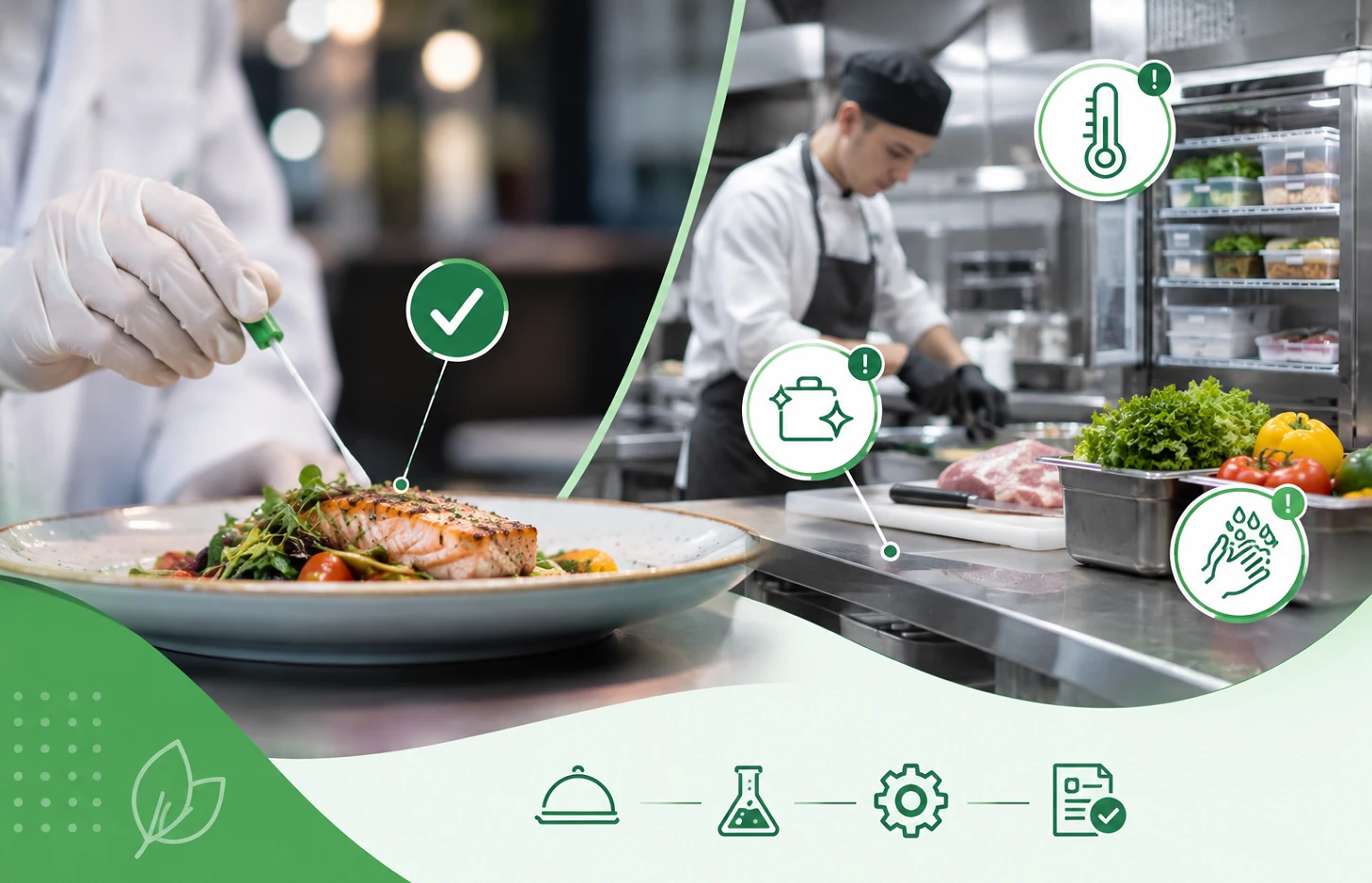
Why Can't You Settle for Testing the Finished Dish?
A food sample is an important tool, but it represents a particular sample at a particular point in time.
A dish that was tested and found sound does not prove that the entire work process in the kitchen is sound at every moment.
It may be, for instance, that a particular product is sound but there is a weak point in the separation between raw and ready food; that a surface does not undergo adequate cleaning and disinfection; or that a cooling, storage or holding process is not controlled as required.
That is why professional control combines sampling, laboratory tests, examination of work processes and adherence to procedures.
Where Might the Risk Be Higher?
Not all eating establishments face the same level of risk.
A business that prepares large quantities of food in advance, for example, has to deal with challenges different from those of a restaurant where much of the food is prepared close to the order.
In catering, event halls, buffets and institutional kitchens, the time between preparation and serving, the transport conditions, keeping the cooling or heating chain and the number of portions handled in parallel may be especially significant.
The target population also matters. When the food is intended for sensitive populations, such as the elderly, children or people whose health condition makes them more vulnerable to foodborne infections, risk management takes on special importance.
What Do You Do When an Abnormal Result Comes Back?
An abnormal result in a food or surface test is not the end of the process, but the start of an investigation.
You need to examine what was tested, what the result was and what took place in the work process around the time of sampling. Depending on the findings, it may be necessary to check the storage and temperature conditions, the cleaning and disinfection processes, the separation of raw materials, the work equipment or staff hygiene.
After corrective actions are carried out, repeat sampling can be performed, as needed, to examine whether the treatment was effective.
The goal is not just to get a "sound result" in the next test, but to understand why the deviation arose and how to prevent its recurrence.
More on cleaning and disinfection

Periodic Sampling Is a Risk-Management Tool
One of the significant differences between handling an event after it has occurred and professional management of food safety is the ability to identify problems early.
An orderly sampling program can give the business a picture over time, identify trends or weak points and check whether the cleaning, disinfection and control operations actually achieve their goal.
Kesar Digum performs food sampling for businesses, restaurants, catering companies, institutional kitchens and food businesses, while maintaining a professional sampling process and forwarding the samples for laboratory testing according to the type of test required.
This turns sampling from a one-off test into a practical tool that helps the business maintain quality, meet the relevant requirements and, above all, reduce risks to the health of diners.
Frequently Asked Questions About Food Sampling in Restaurants
Does every restaurant have to perform laboratory tests on a regular basis?
The requirements that apply to a business depend on the type of activity, the licensing item, the conditions set for the business and the relevant regulatory requirements. Beyond the mandatory requirements, businesses can incorporate periodic sampling as part of their control and food-safety-management setup.
What is tested in a food sample?
The tests are determined by the type of food and the purpose of the sampling. Food laboratories perform, among other things, microbiological and chemical tests, according to the relevant methods and standards.
Why is it worth sampling work surfaces too?
Surfaces and equipment that come into contact with food can be a source of cross-contamination. Testing them can help assess the effectiveness of the cleaning and disinfection and identify risk hot spots in the work environment.
Is food that looks and smells fine necessarily safe?
No. The presence of microbial agents does not necessarily cause a change that can be identified by sight, smell or taste. This is one of the reasons that food safety is based on prevention, control and sampling, and not only on the senses.
What the diner does not see is sometimes the most important part
The diner sees the finished dish. Food safety, on the other hand, begins much earlier - in receiving the raw materials, in storage, in separation, in temperature, in staff hygiene, in cleaning the equipment and in correctly managing the preparation process.
That is why a safe kitchen is not a kitchen that merely passed a single inspection successfully. It is a kitchen where food safety is part of the work routine, even on a busy day, even when hundreds of portions go out in a short time and even when no one from the outside is watching.
To schedule a service or ask a question, call 08-9332299You can also reach us on WhatsApp or leave your details for a callback
We'll be happy to help