
What Is Legionella Bacteria and Why Is It Dangerous?
Everything you need to know about the bacterium, how it spreads, at-risk populations and the Israeli testing standard.
Read MoreDrinking water quality is one of the most important elements in protecting public health, and Ministry of Health regulations require periodic testing across a wide range of water systems. When ordering sampling, one question comes up again and again - what is the real difference between Grade A and Grade B drinking water testing? The key difference lies in the scope of sampling and the type of parameters tested, in line with Ministry of Health requirements and the characteristics of the water system.
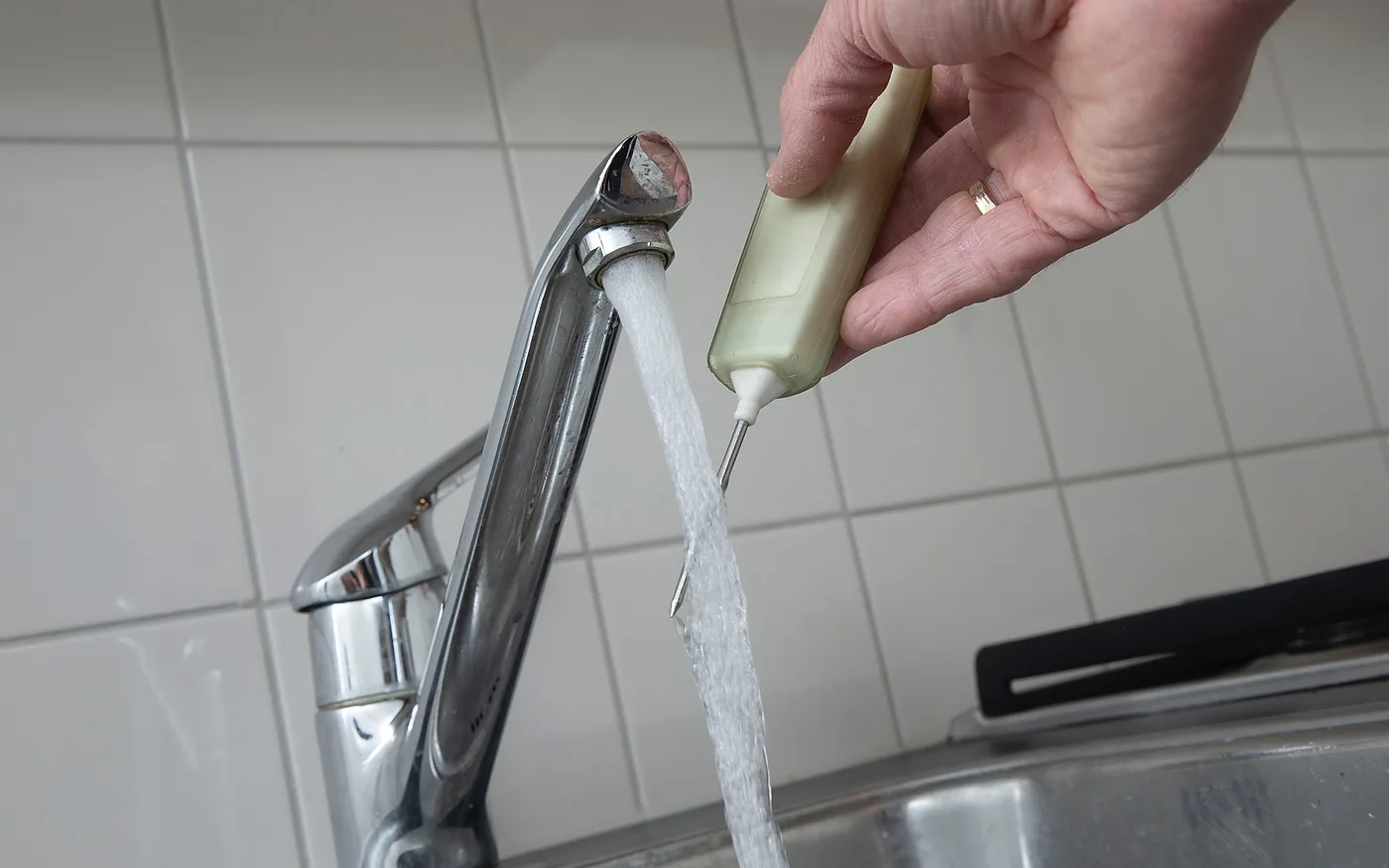
Grade A testing focuses on the ongoing microbiological monitoring of water quality, while Grade B testing extends the analysis to chemical and physical parameters as well. The table below summarizes what each level covers:
Grade A testing focuses on ongoing monitoring of water quality and on the early detection of microbiological contamination. It is designed to provide an up-to-date picture of water safety and to quickly flag events that may indicate contaminants entering the system.
These are the most common and routine tests, and they are performed in public buildings, institutions, nursing homes, hotels, food plants, private water systems and shared residential buildings - anywhere ongoing certainty about water safety is required.
Grade B testing is designed for a broader, more in-depth assessment of water quality. In addition to the microbiological aspects, it also examines chemical and physical parameters - such as metals, iron, copper, lead, fluoride, salts, turbidity and water hardness - depending on the type of system and the regulatory requirements.
The main advantage of Grade B testing is the ability to identify irregularities that cannot be detected by sight, smell or taste alone, which makes it essential for obtaining a complete picture of water quality.
The type of test, the number of sampling points and the frequency are determined by the type of building, the purpose of the water system and Ministry of Health requirements. The Kesar Digum team helps you understand exactly which tests you need and builds a sampling plan tailored to you.
The required type of test is not uniform - it is determined by a number of factors. In many cases, routine tests are carried out throughout the year, and at certain times more extensive tests are also required:
A microbiological test can point to the presence of bacteria or possible contamination in the system, but it provides no information about metals or chemical irregularities. A chemical test, on the other hand, may identify irregularities in water composition, but it does not replace a test designed to detect microbiological contamination. That is why, in many cases, a combination of both levels is required to obtain a complete and reliable picture of water quality.
Drinking water sampling must be performed by a certified sampler and in accordance with the professional procedures of the Ministry of Health. The reliability of lab results begins at the sampling stage itself, so it is essential that the process be carried out in a professional, controlled manner:
Kesar Digum provides drinking water sampling services to institutions, businesses, plants, nursing homes, hotels, residential buildings, clinics, authorities and organizations across the country. We help clients understand which tests they need, perform professional sampling in line with regulatory requirements, and ensure an orderly process from the sampling stage all the way to receiving lab results.
Leave your details and we'll get back to you with a professional answer and a tailored sampling plan, or talk to us now by phone or WhatsApp.

Everything you need to know about the bacterium, how it spreads, at-risk populations and the Israeli testing standard.
Read More
Cleaning frequency under the Public Health Regulations, warning signs and what a proper disinfection process involves.
Read More
What the accreditation means, how it ensures reliable results and why the regulator requires it.
Read More